Appearance
IMP-05 · Medication safety rules, and proving they fire
Both tables start empty. Until a rule exists, nothing is checked. Verabase checks allergies, duplicate therapy, high-alert drugs and organ function out of the box, but which drug pairs interact and how high a dose may go are your Drugs & Therapeutics Committee's decisions. Enter them here, then prove each one works.
Steps
1. Interaction rules
Administration → Medication safety → Add interaction. Enter:
- First drug or class, Second drug or class: whole words, at least 3 characters (Warfarin matches Warfarin sodium 5mg).
- Severity:
- Contraindicated stops the prescription until the prescriber gives a reason.
- Major, Moderate and Minor warn and are recorded on the order, but don't block.
- What happens and What to do about it: the line the prescriber reads at the moment of the alert. An alert with no action gets clicked past.
- Source, e.g. Drugs & Therapeutics Committee, September 2026.
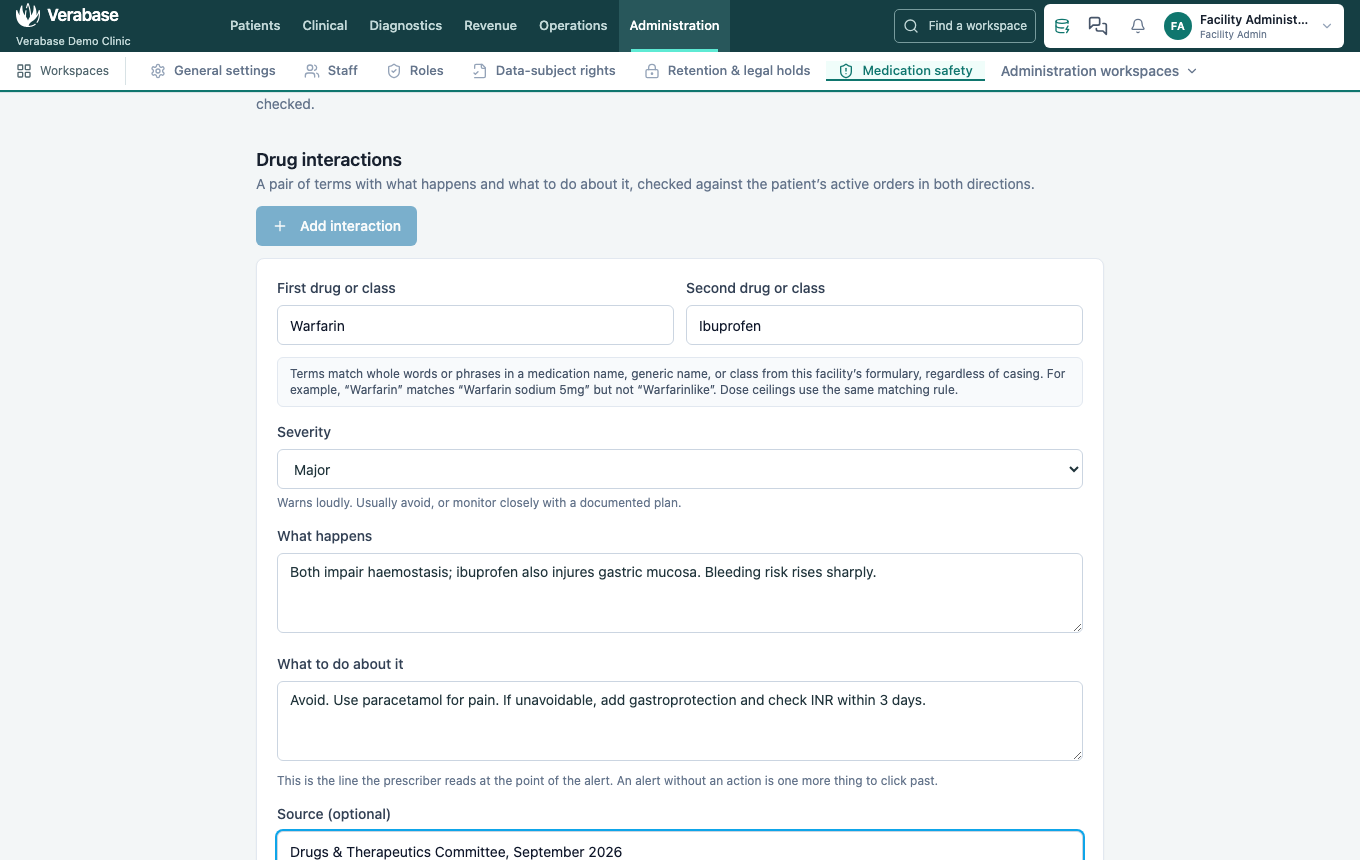
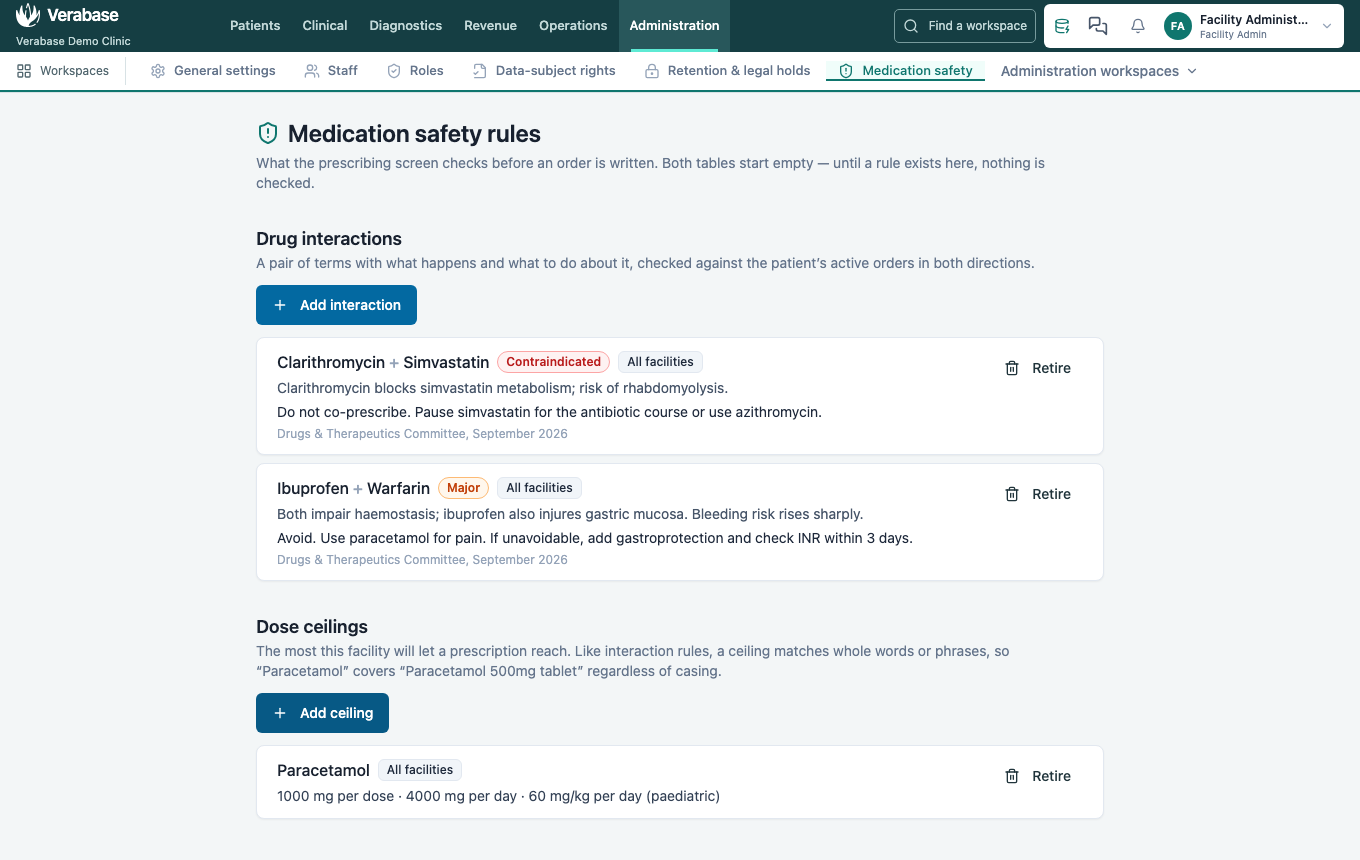
The walk adds Warfarin + Ibuprofen (Major) and Simvastatin + Clarithromycin (Contraindicated).
2. Dose ceilings
Add ceiling: the Drug or generic name, and any of Max single dose (mg), Max daily total (mg) and Paediatric daily (mg/kg) (applied only when the chart has a weight). The walk adds Paracetamol: 1000 mg single, 4000 mg daily, 60 mg/kg paediatric.
3. Prove it, as the prescriber
On an adult patient (the walk registers Chukwuemeka Obi, 62), from the chart's Prescriptions tab:
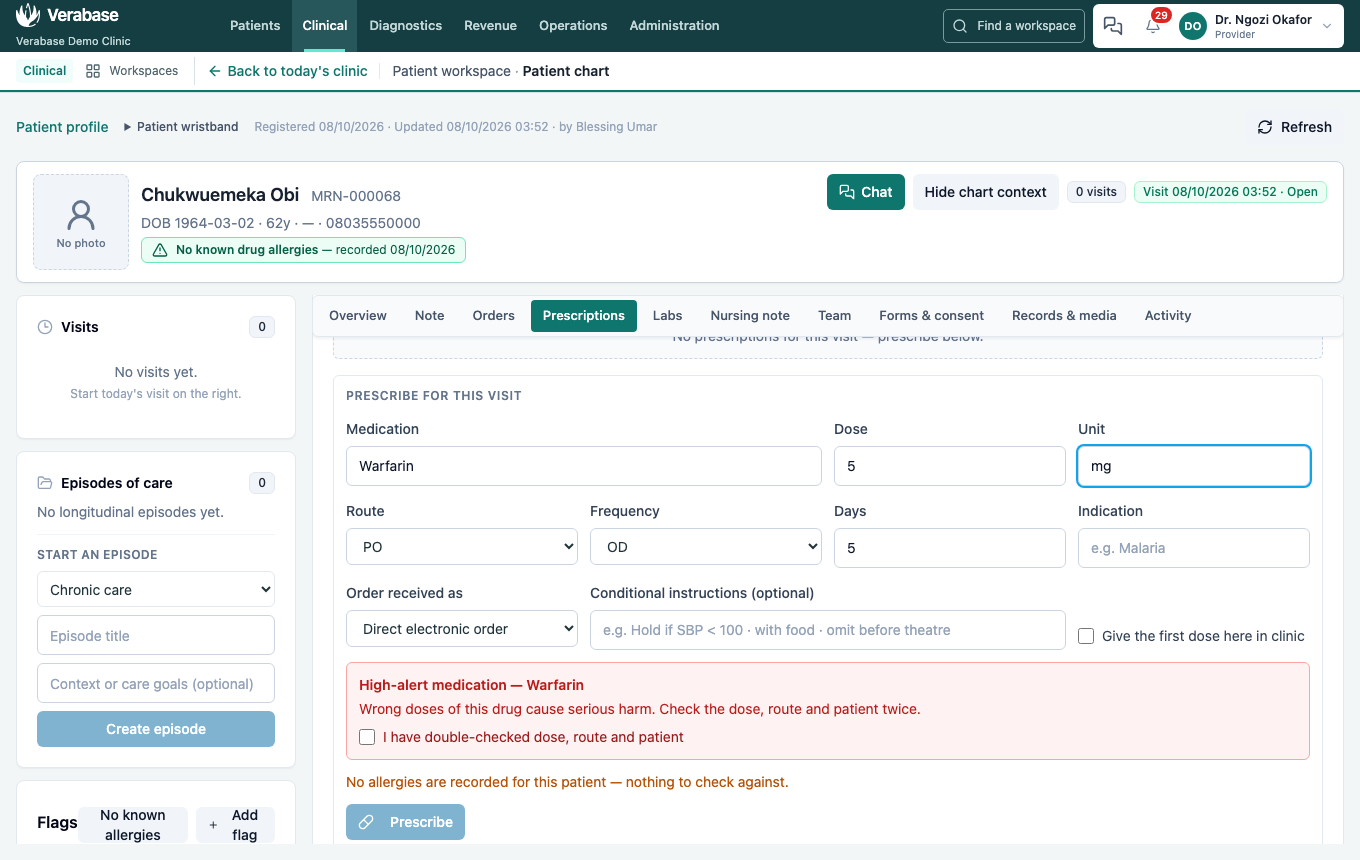
- Warfarin 5 mg OD. Warfarin is high-alert: Prescribe stays disabled until you tick I have double-checked dose, route and patient.
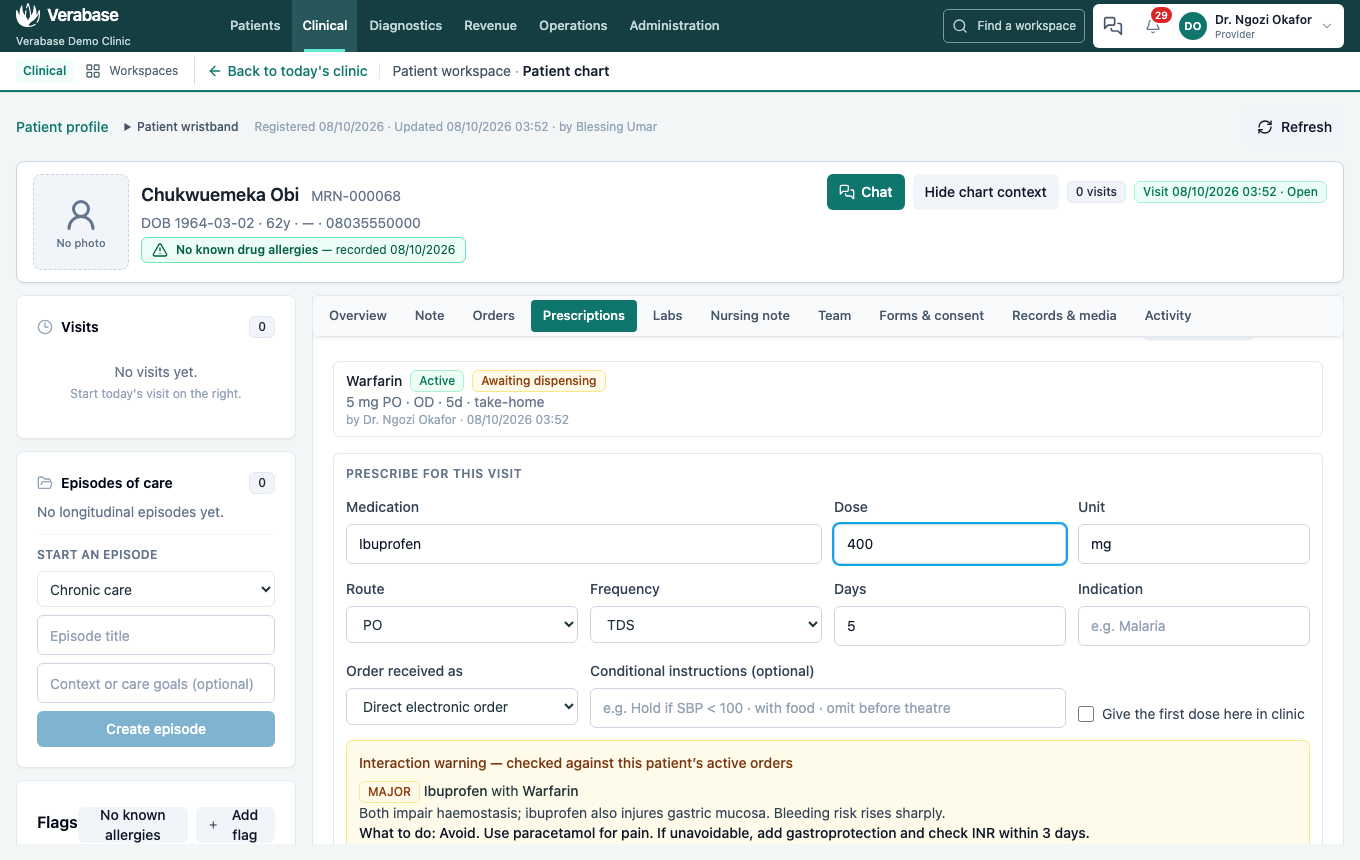
- Ibuprofen 400 mg TDS. Before you prescribe, an Interaction warning shows the severity, the reason and What to do. Because it is Major, you can prescribe; the order then carries a Major interaction with Warfarin badge.
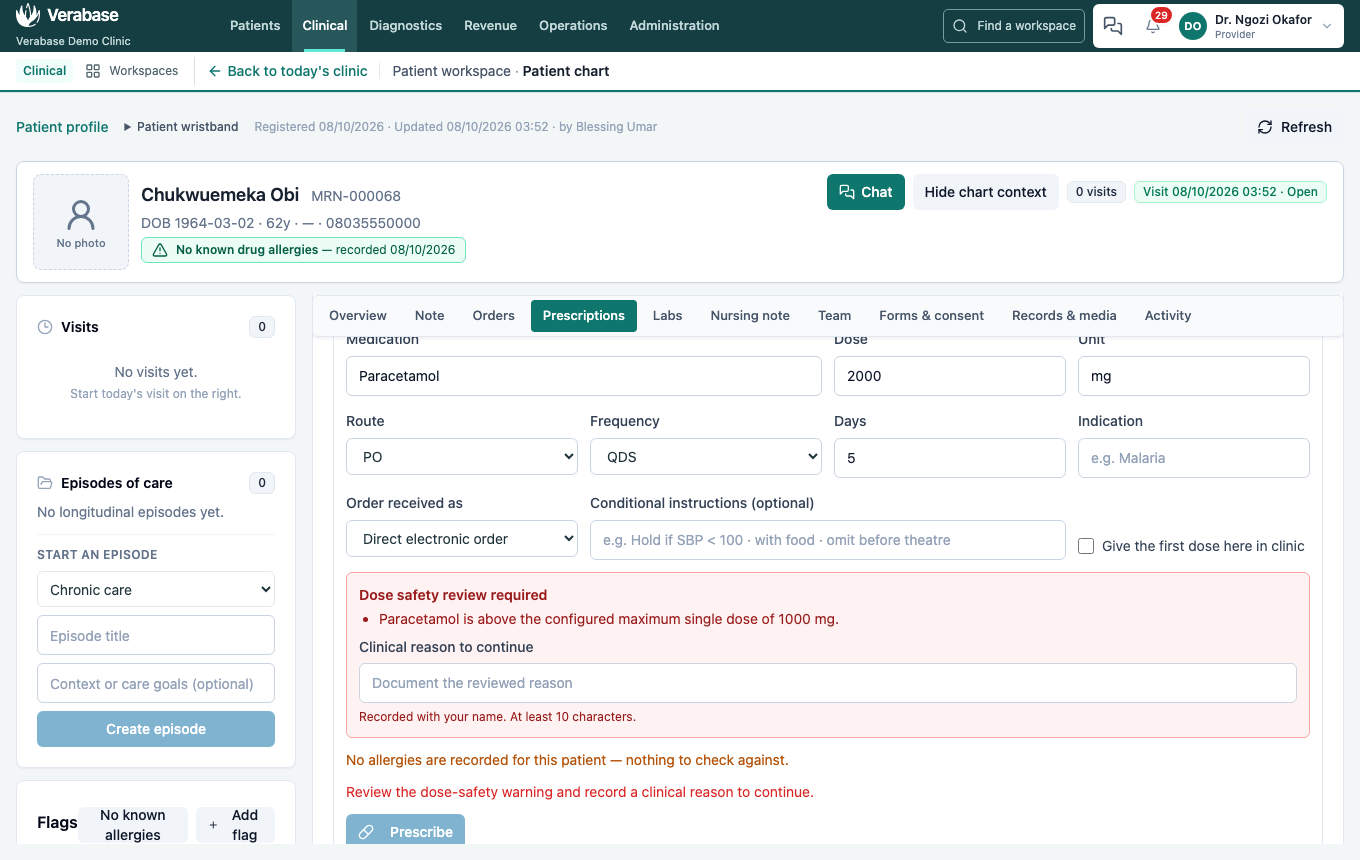
- Paracetamol 2000 mg QDS. Refused: "Paracetamol is above the configured maximum single dose of 1000 mg." A clinical reason to continue is required.
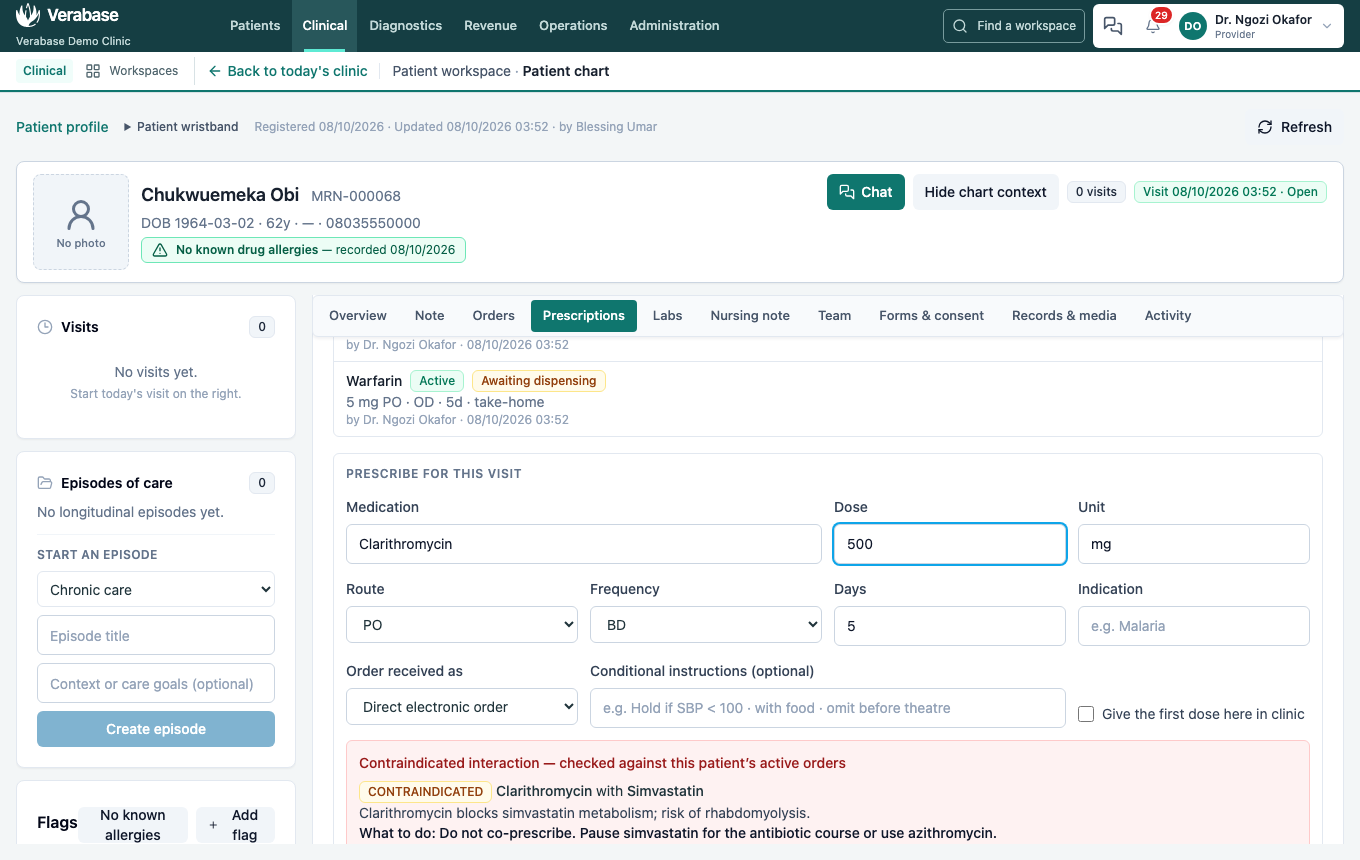
- Simvastatin 40 mg, then Clarithromycin 500 mg BD. A Contraindicated interaction panel appears and Prescribe stays disabled until you write a reason (at least 10 characters, recorded with your name).
Other checks you'll meet
If the patient has recent abnormal liver or kidney results, prescribing a drug that needs dose adjustment asks for a renal/hepatic review with a reason. In the demo, paracetamol for a patient with a raised ALT does this.
4. What the pharmacist sees
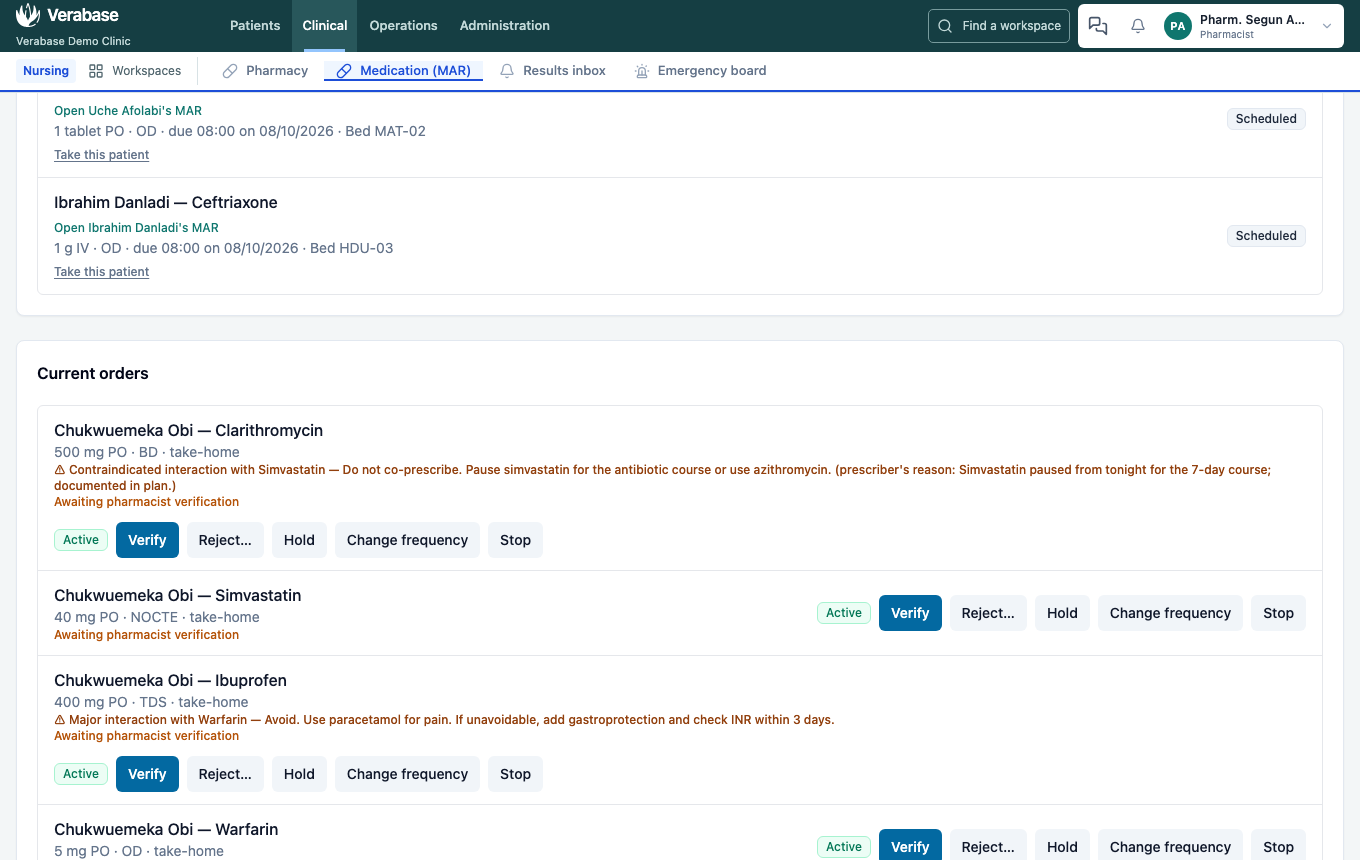
Medication (MAR) → Current orders: each order awaiting verification shows its interaction and the prescriber's reason, so the pharmacist verifies with them in view.
You're done when…
- [ ] Your formulary's known dangerous pairs are entered, each with an action.
- [ ] Dose ceilings exist for the drugs prescribers most often overshoot.
- [ ] You have seen each severity fire on a test patient.
Practice task
Add Methotrexate + Trimethoprim as Contraindicated. Prescribe methotrexate then trimethoprim for a test patient. Check: Prescribe is disabled until a reason is written, and the pharmacist sees the interaction and the reason.
Related journeys
FAC-OPD-01 step 6 (allergy gate) · FAC-RX-02 (catalogue)