Appearance
FAC-BILL-03 · Claims: from an insured patient's bill to the payer's remittance
When a patient is covered by an HMO or the NHIA, their bill is charged to that coverage. The patient pays only their co-pay at the desk, and the rest is claimed from the payer. Claims go to the payer in batches. When the payer pays, often less than was claimed, the cashier records the remittance against each claim.
Why this matters
Unclaimed bills are revenue the hospital has earned and will never see. Claims sent to the wrong payer, or for the patient's share as well as the payer's, get rejected. Payers usually pay less than claimed. If that shortfall isn't recorded per claim, nobody can chase it or appeal it.
Before you start
- Cashier:
cashier@demo-clinic.test/Verabase-2026. - The patient's coverage must be recorded and verified eligible before the visit is billed. An unverified coverage can't be billed (FAC-OPD-01).
- The demo has five claims already drafted or submitted, and one insured bill still to claim.
Steps
0. Who pays what on an insured bill — as Billing Officer
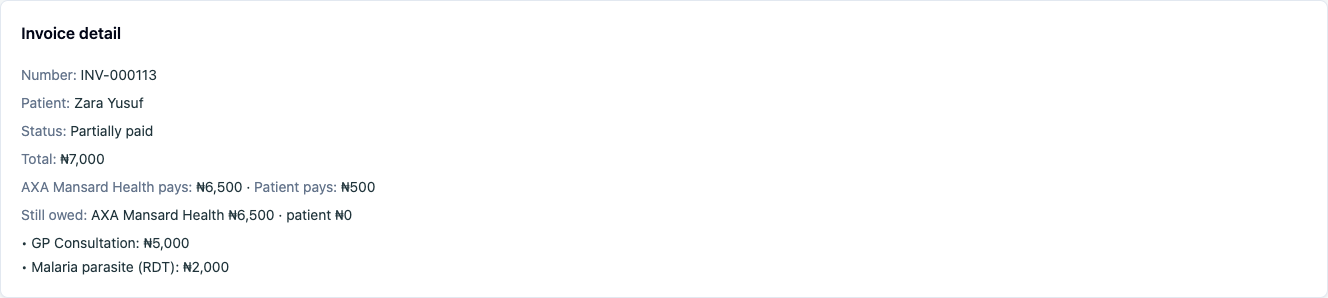
Revenue → Billing. Pick an insured patient's bill. Under the total, Invoice detail shows <payer> pays: ₦… · Patient pays: ₦…. The patient's share comes from their plan: the co-pay on each service, worked out per line.
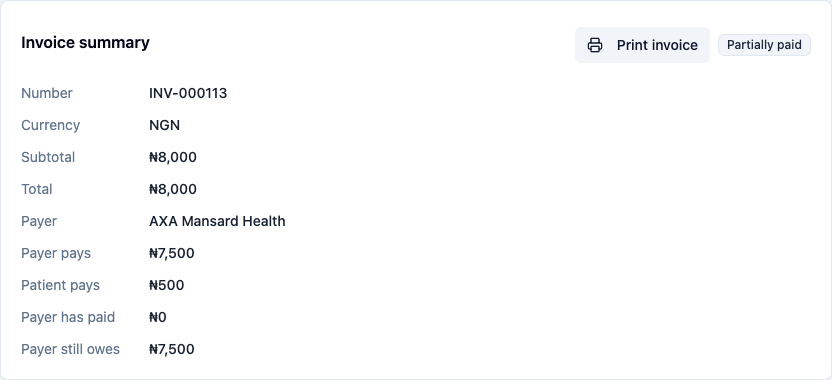
Open the bill with Open invoice receipt and add a charge, e.g. Dressing pack × 1, ₦1,000. Invoice summary shows the new total. The patient's co-pay is unchanged; a service with no co-pay in the plan goes to the payer's share. A desk discount or waiver comes off the patient's share first.
1. Draft a claim from an insured bill
Revenue → Claims. In Draft from invoice, the Invoice list shows only bills charged to an insurer or HMO that don't have a claim yet. Each is listed as invoice · patient · payer · amount to claim (the payer's share). Self-pay bills aren't listed. The Payer is taken from the patient's coverage on the invoice; you don't type it.

Choose Draft claim. The claim appears in the Claim queue as Draft, with the patient, payer and amount. The bill leaves the list: an invoice has one live claim at a time.
The claim is for the payer's share only. If the plan has a co-pay, the patient's part is collected at the desk and isn't claimed.
2. Submit a batch for one payer
In the Claim queue, choose the Batch payer, tick the draft claims for that payer, and choose Submit 1 claim (or Submit N claims). The claims are submitted together under one batch number, e.g. CLMB-000001. The batch appears under Recent submission batches, and each claim shows Batch CLMB-….
3. Record the payer's remittance
When the payer's remittance advice arrives, find each claim in the queue. Enter what was Paid (₦) on that claim and the payer's Reference, then choose Record remittance. The amount and reference boxes belong to their own row.
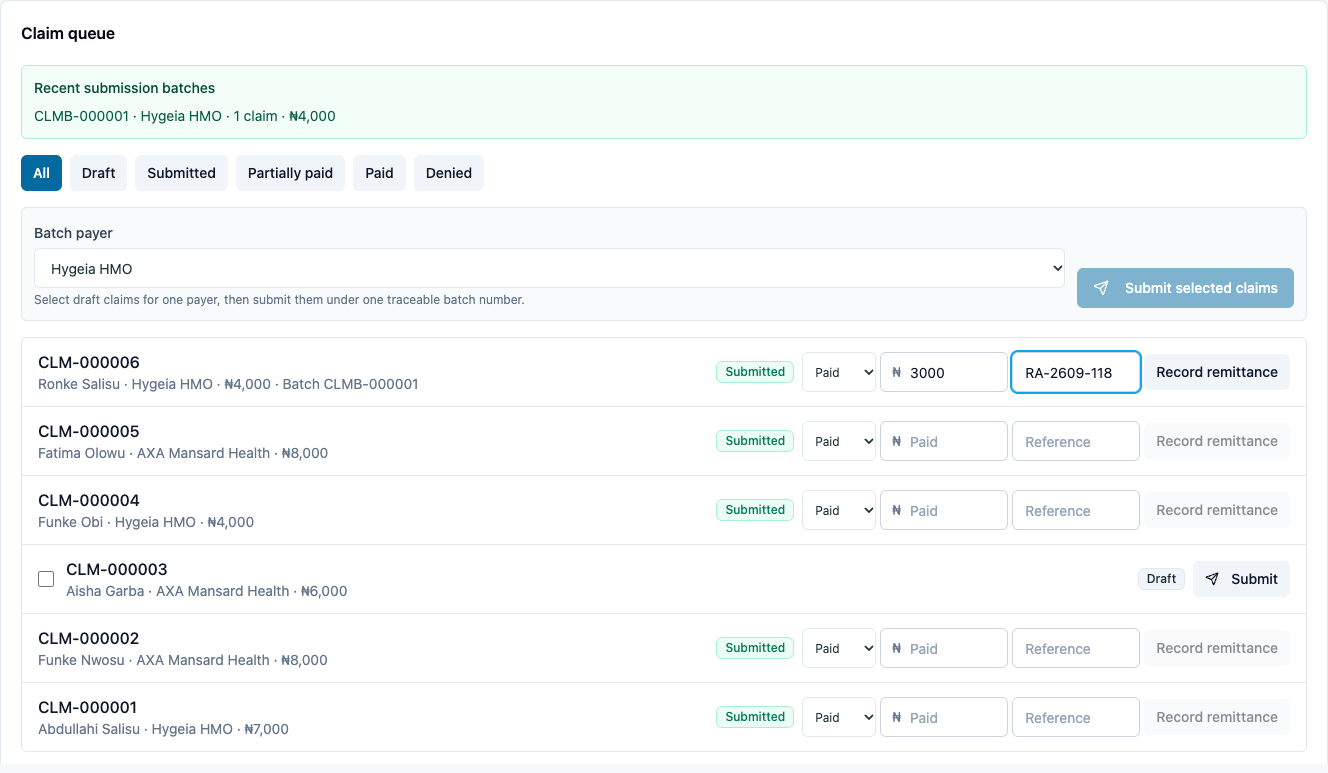
If the payer paid the full amount the claim becomes Paid; if less, Partially paid. Either way the payer's money is recorded as a payment on the bill, so the bill and receivables stop counting it as owed. Use the status buttons above the queue to list, for example, every Partially paid claim to follow up.
4. The claim's record
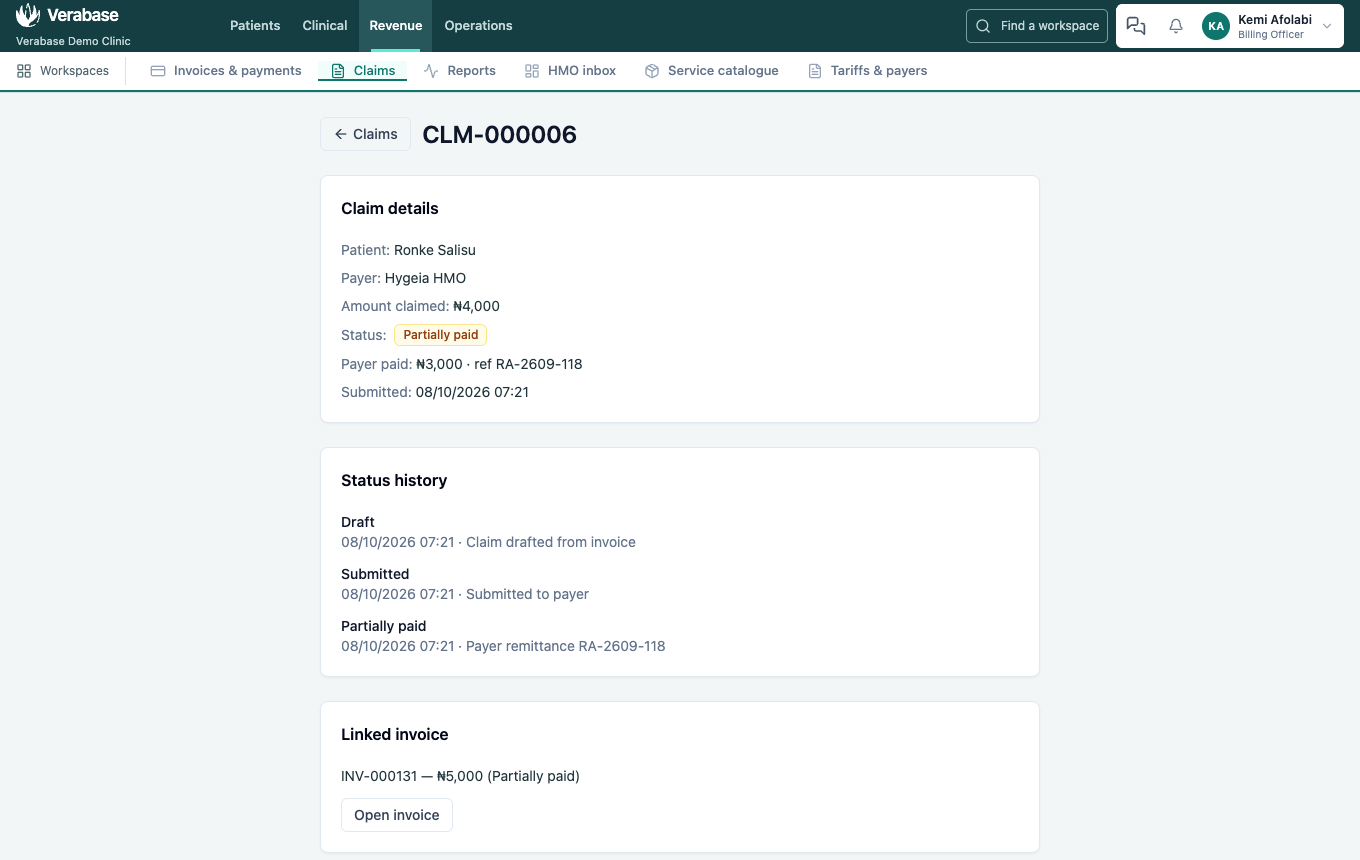
Open the claim number for its record: patient, payer, amount claimed, what the payer paid with its reference, and the history from Draft through Submitted to Partially paid. Linked invoice opens the bill it came from.
5. Settle what the payer didn't pay
Back in the queue, a part-paid claim shows Shortfall ₦…: what was claimed minus what the payer paid. Give a reason of at least ten characters, then choose:
- Write off: the payer paid its agreed tariff and the difference won't be collected. The bill comes down by the shortfall.
- Bill patient: the patient pays the difference. The patient's share of the bill goes up by the shortfall; the total doesn't change.

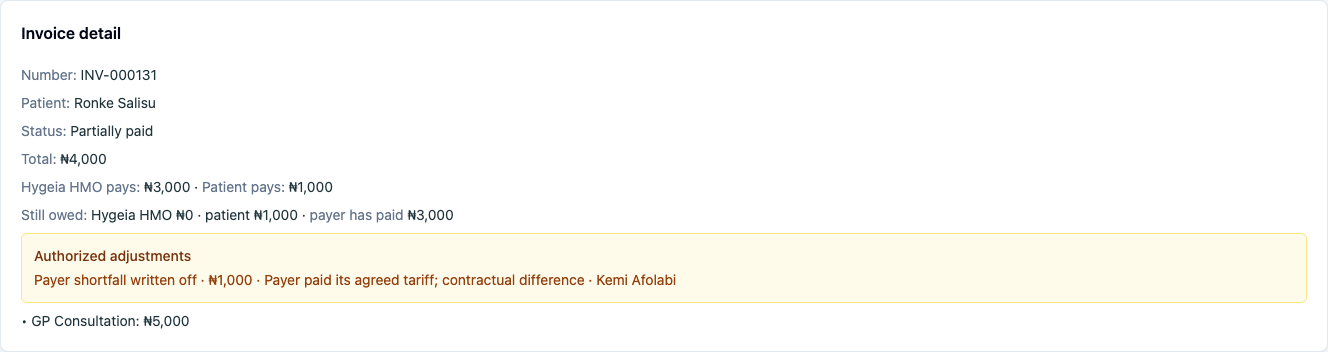
The claim row then reads Shortfall ₦1,000 written off · reason · who. On the bill, Still owed shows nothing left for the payer, what the payer has paid, and the adjustment with its reason. Once the patient's co-pay is in, the bill is Paid.
6. A denial the payer won't reverse
When a claim is Denied, appeal it first if the payer may pay (FAC-BILL-05). While an appeal is undecided the shortfall waits. If the patient will pay instead, give the reason and choose Bill patient. The whole payer share moves to the patient, and the denial can no longer be appealed.

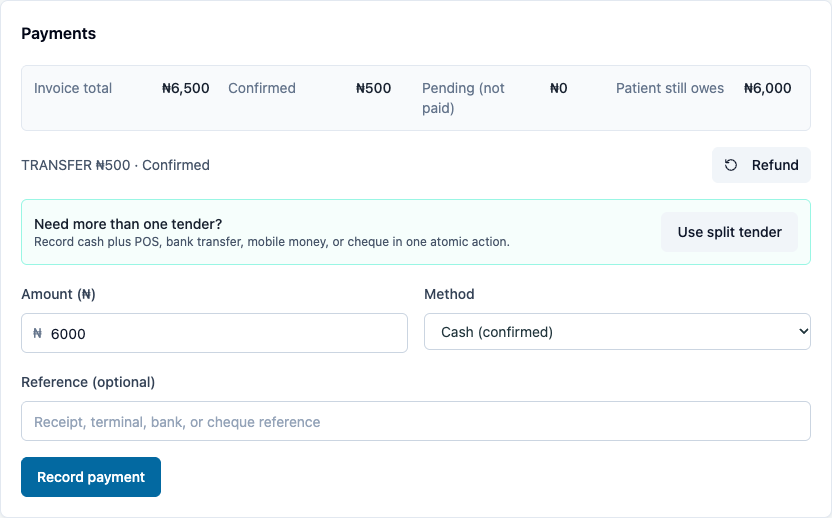
Open the claim, then Open invoice under Linked invoice. The bill shows Payer pays ₦0 and Payer still owes ₦0, and Payments offers what the patient still owes. On an insured bill the desk only ever takes the patient's share.
What Verabase will refuse and why
| You try to… | Verabase says | Why |
|---|---|---|
| Claim a bill from a different payer than its coverage | This invoice is billed to … Claim it from that payer. | The payer on the coverage is the one who owes |
| Claim a bill that already has a claim | This invoice already has a claim. Deny that one before raising another. | Two claims for the same care is what payers treat as fraud |
| Bill an insured visit before the coverage is verified | The payer coverage must be active and verified eligible before billing. | An unverified member may not be covered at all |
| Take more than the patient's share of an insured bill at the desk | This bill is insured, so the patient pays only their share at the desk. The rest is claimed from the payer. | The payer's share is claimed, not collected twice |
| Settle a shortfall while its appeal is undecided | An appeal on this claim is still open. Settle the shortfall once the payer decides it. | The payer may still pay |
| Appeal a denial whose shortfall is settled | This denial's shortfall is already settled, so it can't be appealed. | The same money would be claimed twice |
Not covered here
Remittance batches (one payer payment covering many claims), appeals against denied claims, the payer export file, receivables ageing and patient deposits each work from the same pages. They'll get their own journey (FAC-BILL-05).
You're done when…
- [ ] Every insured bill has a claim to the payer on its coverage.
- [ ] Claims are submitted in batches per payer.
- [ ] Every remittance is recorded on its claim with the payer's reference, and part-paid claims are followed up.
Practice task
Draft a claim from the insured bill, submit it in a batch, and record a remittance of ₦1,000 less than claimed. Check: the trainer sees the claim Partially paid with the batch number, the amount the payer paid and its reference.
Related journeys
FAC-BILL-02 The cashier's shift · FAC-BILL-04 Adjustments and refunds