Appearance
FAC-BILL-05 · Receivables, inpatient deposits, payer remittances and appeals
Money that is owed, money taken in advance, and money that arrives from payers in bulk. Receivables ageing shows every unpaid bill by how long it has been owing. An inpatient deposit is taken at admission and drawn down against the running bill as charges accrue. A payer usually pays many claims with one transfer (a remittance batch), and sometimes denies a claim, which the hospital can appeal.
Why this matters
Bills nobody looks at don't get paid. An inpatient who runs through their deposit without anyone noticing leaves with a debt the hospital may never collect. And a payer's single transfer, if it isn't matched claim by claim, hides which claims were short-paid or never paid at all.
Before you start
- Cashier:
cashier@demo-clinic.test/Verabase-2026. - Run FAC-BILL-03 first, or use the demo's submitted claims.
Steps
1. What is owed
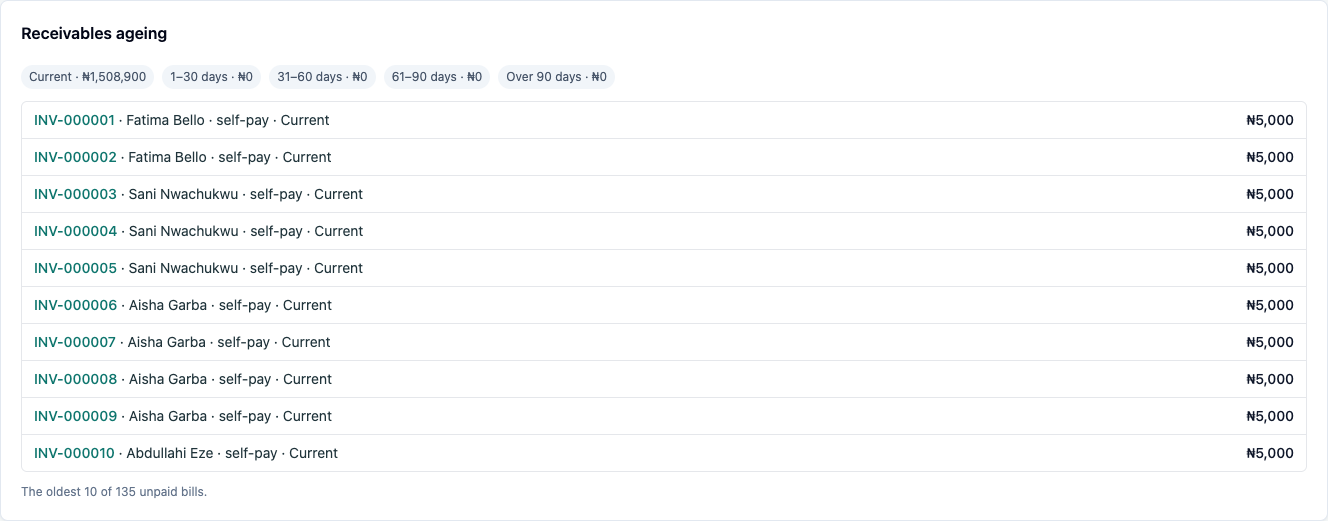
Revenue → Invoices & payments → Receivables ageing lists unpaid bills by patient and who pays (self-pay or the insurer), oldest first, totalled by age: Current, 1–30 days, 31–60, 61–90 and Over 90. A bill counts from the day it was raised until it is paid in full; a running inpatient bill counts while the patient is still in.
2. An inpatient deposit and the running bill
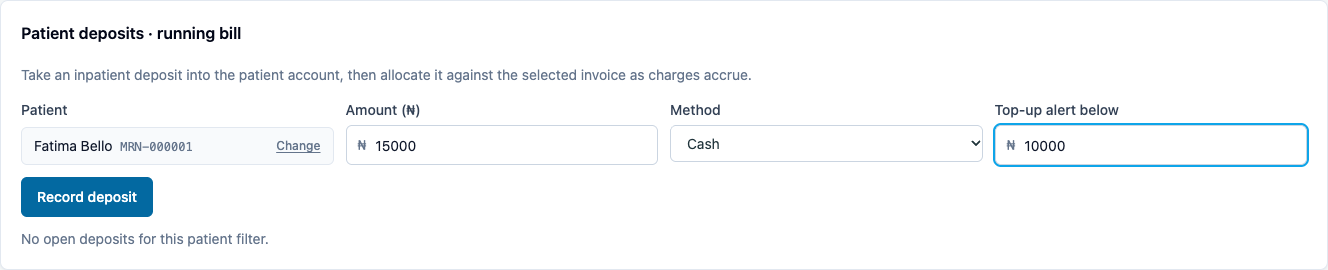
In Patient deposits · running bill, choose the Patient, the Amount, the Method and a Top-up alert below amount, then Record deposit.
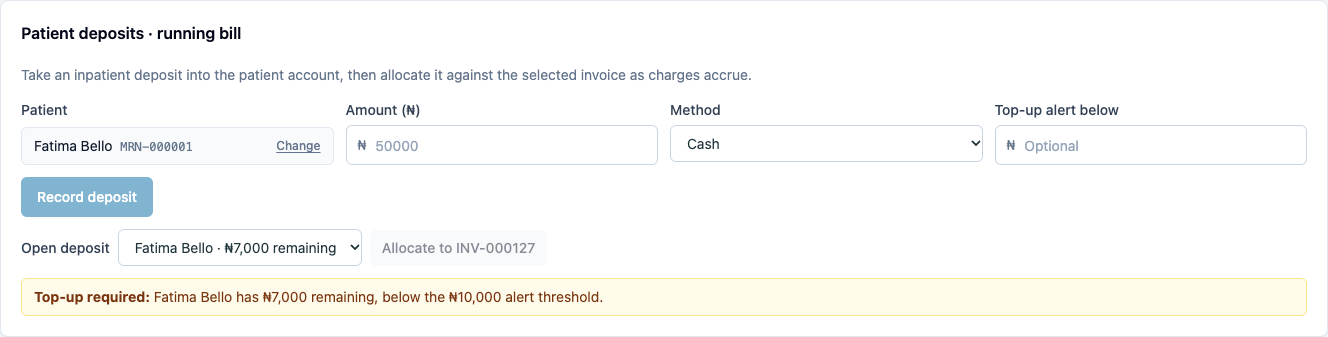
As charges accrue, choose the patient's invoice, enter the amount in Amount, and choose Allocate to INV-…. When what's left of the deposit falls below the alert, the card says so, so you can ask the family for a top-up before the deposit runs out:
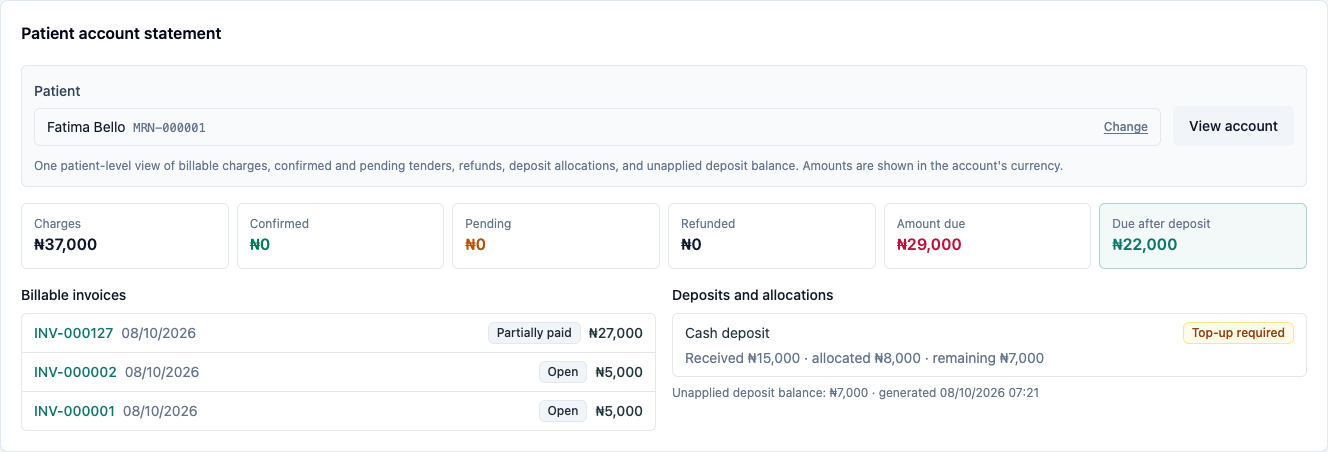
Patient account statement brings it together for one patient: charges, payments, refunds, the deposit and what was allocated from it, and what is still due.
3. A payer's lump-sum payment
Revenue → Claims. When a payer's remittance advice arrives with one transfer for several claims:
- In Payer remittance batches, choose the Payer, enter the transfer Reference and the Received amount, and choose Record batch.
- For each claim on the advice, in the Claim queue, choose the batch in the row, enter what was Paid on that claim and its line reference, and Record remittance.
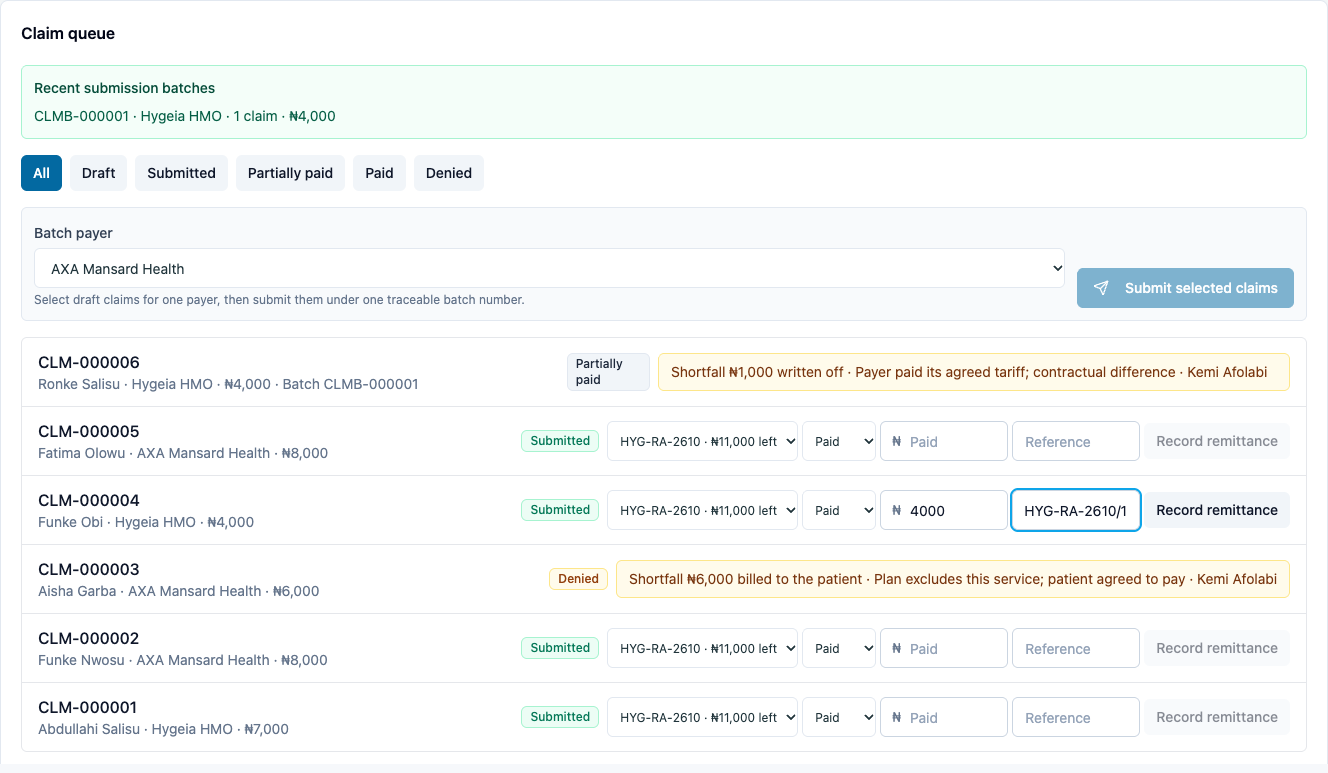
The batch shows how much of the transfer has been allocated to claims and what remains. When every claim on the advice is recorded and nothing remains, choose Close batch: the batch is Reconciled.

4. A denial, and its appeal
If the payer refuses a claim, set the row's Outcome to Denied, enter the payer's reason and the advice reference, and choose Record denial. Then, on the denied claim, write why the payer should pay (at least ten characters) and choose Appeal denial:

The appeal is listed under Appeals as Submitted. When the payer accepts it, choose Overturn: the claim goes back to Draft, ready to resubmit. When it is paid, record the remittance as usual; the denial stays on the claim's history.

5. The payer file
Export … file (top right) downloads the claims for the batch payer as a spreadsheet: one row per claim line, with amounts as plain decimals in the claim's currency (e.g. 6500.00).
What Verabase will refuse and why
| You try to… | Verabase says | Why |
|---|---|---|
| Record a denial without the payer's reason | Record denial stays disabled | The reason is what the appeal answers |
| Appeal without saying why | Appeal denial stays disabled | A payer won't reconsider a blank appeal |
You're done when…
- [ ] Receivables are reviewed weekly, oldest first.
- [ ] Every inpatient has a deposit, and every top-up warning is acted on.
- [ ] Every remittance batch is closed, with each claim on the advice recorded against it.
- [ ] Every denial is reviewed and, where the payer is wrong, appealed.
Practice task
Take a ₦20,000 deposit for an inpatient with a ₦5,000 alert, allocate ₦16,000 to their bill, and read the top-up warning. Then record a denial on a submitted claim and appeal it. Check: the trainer sees the deposit with ₦4,000 remaining and the warning, and the appeal under Appeals.
Related journeys
FAC-BILL-02 The cashier's shift · FAC-BILL-03 Claims · FAC-BILL-04 Adjustments and refunds