Appearance
FAC-ED-02 · Ambulance handover and the resuscitation timeline
The receiving nurse records the ambulance crew's account as given, then the resuscitation scribe records actions as they happen. Both records belong to the patient's emergency visit. A closed resuscitation log stays readable and cannot be extended.
Why this matters
The crew may be gone before the patient can speak. The incident time, mechanism, treatment on the way and first observations can affect decisions later, so the record needs to distinguish what the crew reported from what the hospital verified. During resuscitation, a timestamped event log is easier to use and review than a paragraph written afterwards.
Before you start
- Nurse:
nurse.eze@demo-clinic.test/Verabase-2026. - The patient has a chart. If there is no open visit, the handover form can open an emergency visit for them.
- Use the crew's words and the times they report. The values below are for practising the demo flow only.
Steps
1. Receive the crew's report — as Nurse
Open Clinical → Emergency → Ambulance handover. Search for the patient and select the matching chart. If no emergency visit is open, choose Open an emergency visit; the saved handover will attach to that visit.
Record the report in ATMIST order:
- A — Age as given by the crew.
- T — Time of the incident and arrival. The pre-hospital interval updates as you enter the incident time. Check that the incident is not after arrival.
- M — Mechanism, I — Injuries or illness, and T — Treatment given on the way.
- S — Signs on scene: observations and consciousness before the department's own assessment.
Only mechanism, injuries or illness, and arrival time are required. Save what the crew has provided if other details are unavailable.
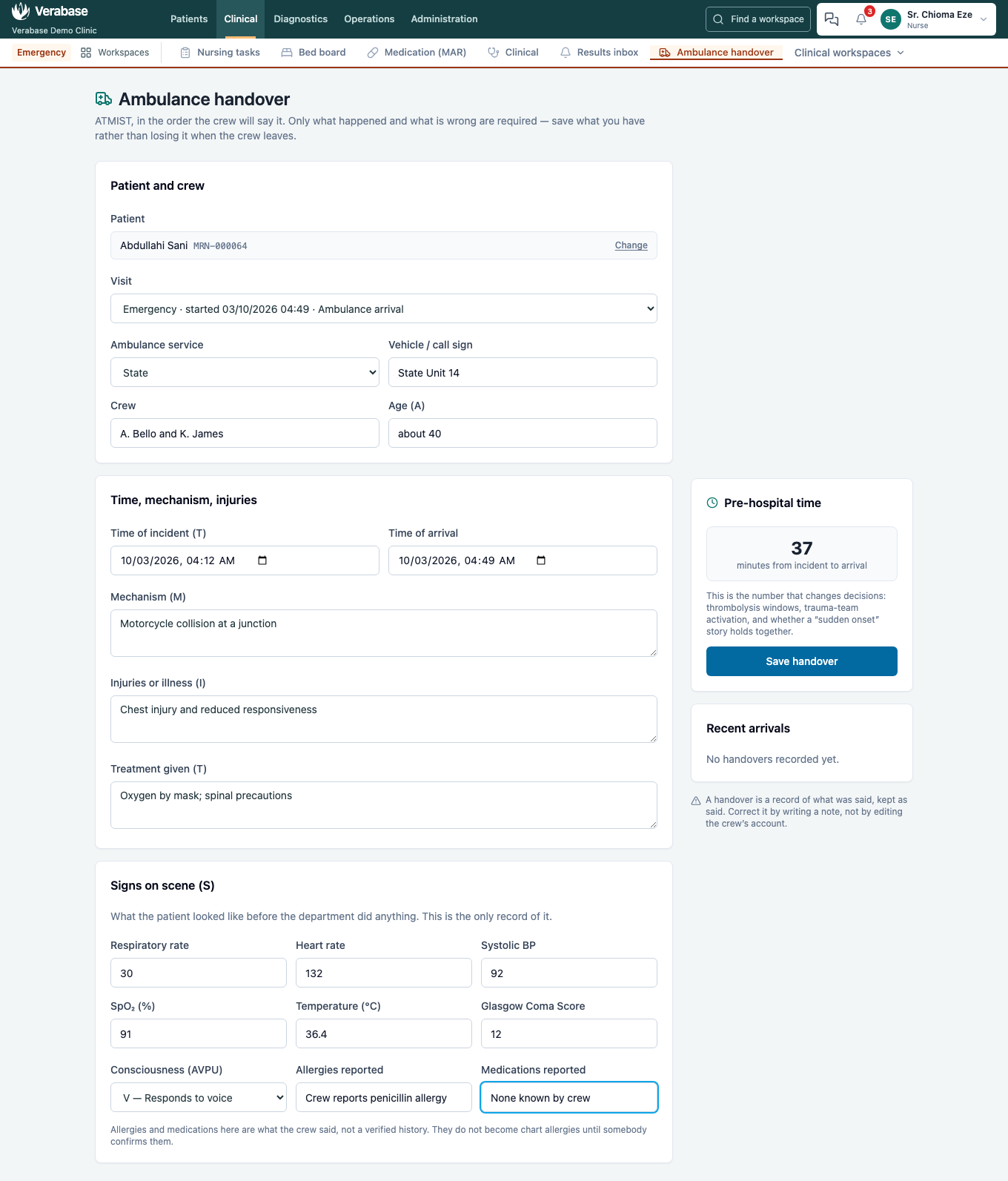
Select Save handover. The form returns to the emergency board. Open Ambulance handover again and check Recent arrivals to confirm the mechanism and pre-hospital interval were kept.
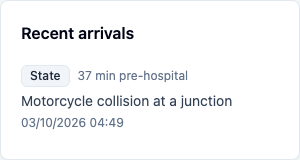
The handover is a record of what the crew said; it does not silently turn reported allergies or medicines into verified chart history.
2. Start a resuscitation log — as Nurse
Open Clinical → Emergency → Resuscitation and choose Start a resuscitation. Select the same patient and emergency visit, then enter the team leader. Choose Start — the clock runs from now when the team begins. The summary shows elapsed time, shocks, adrenaline and the latest rhythm.
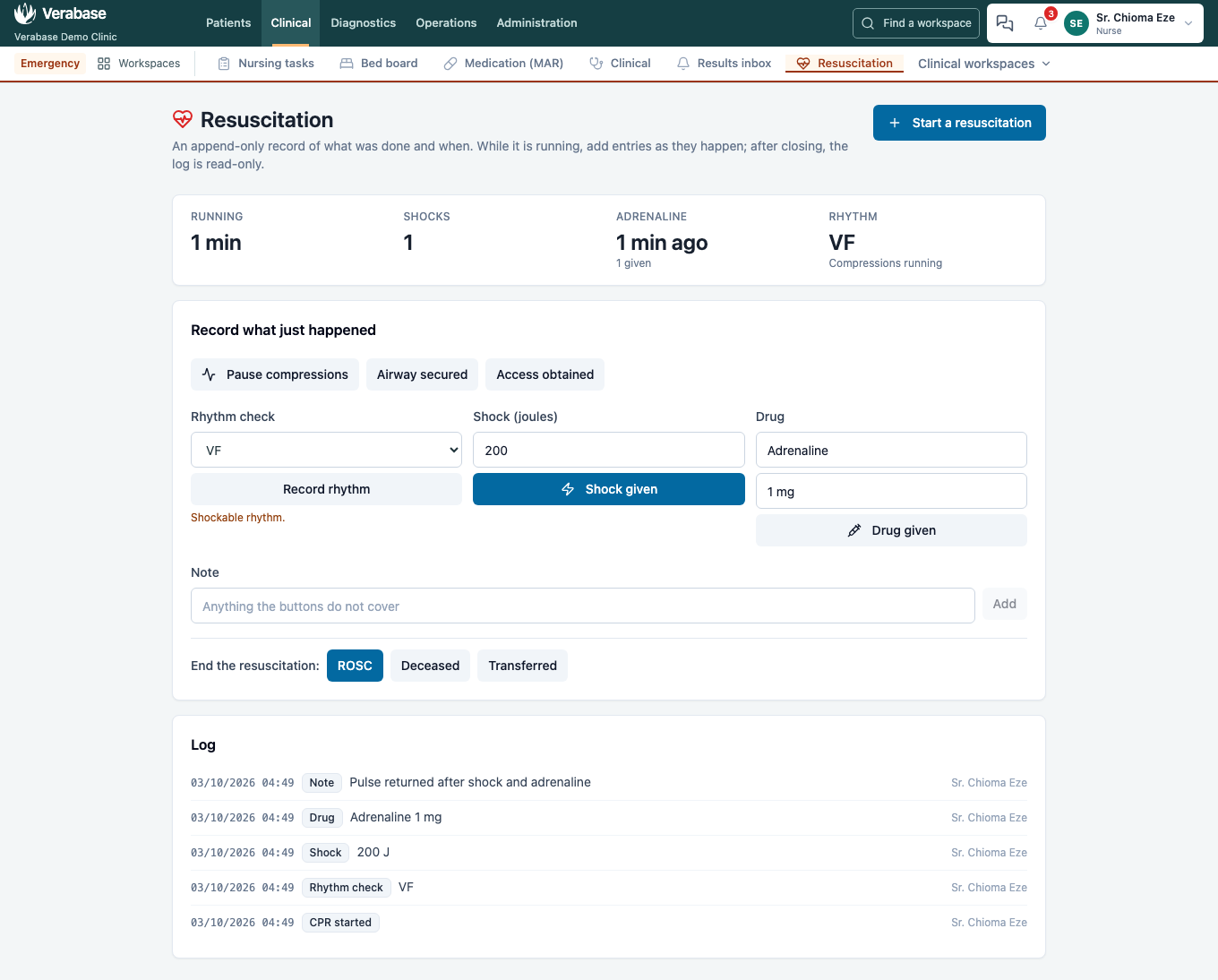
3. Record actions as they happen
Use the buttons to append Start compressions, Record rhythm, Shock given, Drug given, Airway secured or Access obtained. Use Note for an event the buttons do not cover. The log shows the event time and who recorded it. The shock and drug fields start with common values; verify them before saving each event.
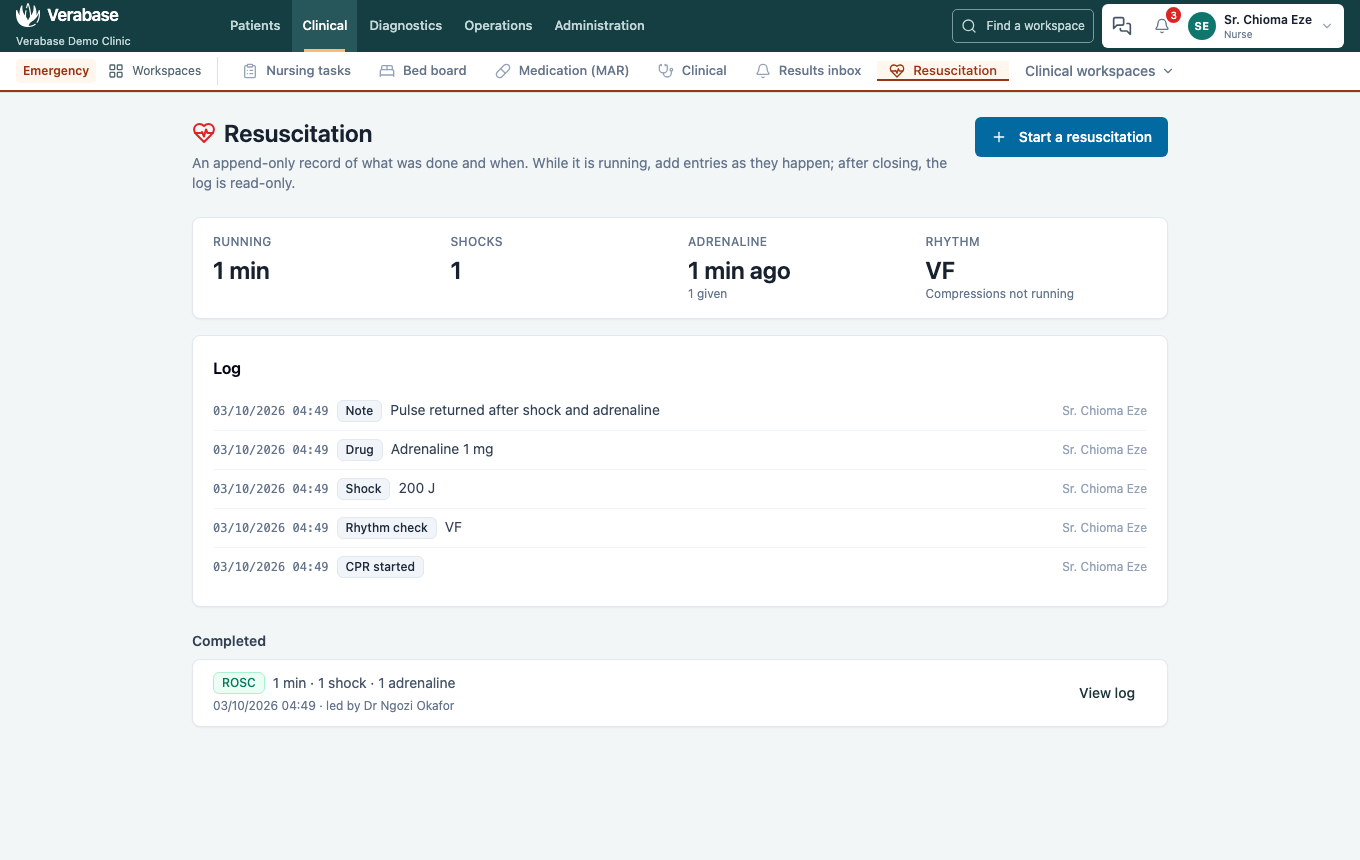
Choose the actual outcome at the end of the resuscitation. For the demo practice, choose ROSC only if that is the outcome being recorded. The completed summary shows the outcome, elapsed time, shocks and adrenaline.

Choose View log to review the entries. Closed records have no event-entry controls. If the record needs correction after closure, follow the facility's approved clinical documentation correction process; the resuscitation event history cannot be edited.
What Verabase will refuse, and why
| You try to… | Verabase says or does | Why |
|---|---|---|
| Save the handover without a mechanism, injuries or arrival time | The save action stays disabled and lists what is missing | A handover without the reason for arrival is not useful to the receiving team |
| Enter an incident time after arrival | The form asks you to check both times | A negative interval would turn a typing error into a clinical fact |
| Add an event after closing the resuscitation | The server refuses the write | A closed event history must not silently change |
You're done when…
- [ ] The ambulance handover is attached to the patient's emergency visit and appears in Recent arrivals.
- [ ] The pre-hospital interval matches the two reported times.
- [ ] Resuscitation events show their type, details and author in the log.
- [ ] The completed summary matches the recorded events, and the closed log has no write controls.
Practice task
On a fresh demo, record a simulated ambulance handover, then open a resuscitation for the same patient and visit. Add the actual events and close with the observed outcome. Check: the recent-arrival list retains the handover interval, and the completed resuscitation summary agrees with its log.
Related journeys
FAC-ED-01 Emergency arrival · FAC-IPD-01 Inpatient stay · FAC-MAR-01 The drug round